
How I Live Now
The Protocol

In interviewing sources for my latest journalism piece about Long COVID, I realized despite the heartbreak that forced me to move home, a bright spot is that I ended up accidentally moving next door to one of the best health systems in the country, and one of the few remaining clinics devoted to the research and treatment of Long COVID.
Because there is treatment. It’s just not widely known, not implemented. Or covered by insurance.
You might consider stopping reading now, and I would ask you to re-consider. You may not think you have Long COVID. But that, sadly, might be a mistake.
About 18 million people have it, yet this number is believed to be an undercount because the symptoms are so varied, because doctors don’t know or don’t care to spot it, because people have gaslit themselves and others into assuming COVID is over, and because some people don’t want to believe they had COVID even one time, let alone the five infections which may be average.
You didn’t have to have had a severe infection to get Long COVID and you can contract the disease after only one infection. I did.
If you’re tired and you don’t know why, if you have headaches, if you have joint pain, if you struggle to remember some things. If suddenly you have high cholesterol or stomach problems or brain fog or arthritis or tumors, I encourage you to read on. This is the protocol created for me by the Long COVID clinic at the Cleveland Clinic, and especially if you don’t live near a clinic or can’t find or afford treatment, I’m telling it to you.
This is how I live now.
In sum, the three most helpful things for me, in order: Low-Dose Naltrexone (LDN), SIM01…and sensory deprivation tanks.
Medication
I came to the clinic for my headaches, which at that time had been pretty much daily for three years. Otherwise, I thought I was fine. I had attempted to find treatment for my headaches, but my brain MRI had been normal and all the other doctors I had visited just kind of shrugged and said my pain was weird, including a neurologist.
But at the Long COVID clinic, they were immediately horrified.


No, the nurse taking my history said, the most effusive I think I’ve seen a nurse. Nope. No. We need you well.
Three years is too long, my pulmonologist said, gentler.
And it was, because the weird head pain? That was actually inflammation in my brain. Those times it felt like my brain was burning alive? Well, turns out it was. Whoops. Luckily, there’s medication which stopped it.
Low-Dose Naltrexone (LDN) is considered a miracle drug for many folks with Long COVID, autoimmune diseases, or fatigue issues—and it absolutely is for me. It’s not expensive, but it’s also not covered by insurance. The side effects can be extreme at first (nausea), so you’ll be put on a very low dose and gradually build up to higher, which is still pretty low.
Supplements
If you suspect you have Long COVID and your doctor only wants to treat you with supplements and vitamins, find another doctor (you can visit Cleveland remotely, if that helps).
This is a huge issue. Many doctors continue to treat Long COVID as a mental health issue. It is not. It is a physical health one with physical symptoms. Vitamins aren’t going to cut it. That said, COVID can strip you of vitamins.
I need mobility aids not in the moment, but for future moments.
I take Vitamin D. I also take magnesium glycinate at night for sleep, and Migravent, which is brain health support, during the day. Again, I didn’t come up with these on my own. These were laid out by my doctors in a treatment plan.
The only thing that has helped my fatigue, which took a turn for the worse once my headaches went away (go figure!), is a probiotic called SIM01. This is over-the-counter but quite expensive. Please consider becoming a paid subscriber…
Diet
No alcohol. I’ll write about this someday, why I stopped. I had stopped before I visited the clinic but they were happy to see this development. They also recommend cutting down on coffee and sugar, but I am only human.
The clinic put me on a diet of a lot of fish, nuts, broccoli, cauliflower, beets, kimchi, flaxseed, turmeric, herbs like parsley. Organic whenever possible. No plastic touching food or water (no plastic water bottles). I’ve mostly stopped buying fresh food at the grocery store and instead shop for vegetables, fruit, eggs, meat, and bread from local farmers—more on that later too. I also started growing my own tomatoes, strawberries, potatoes, radishes, and herbs.
Mobility Aids
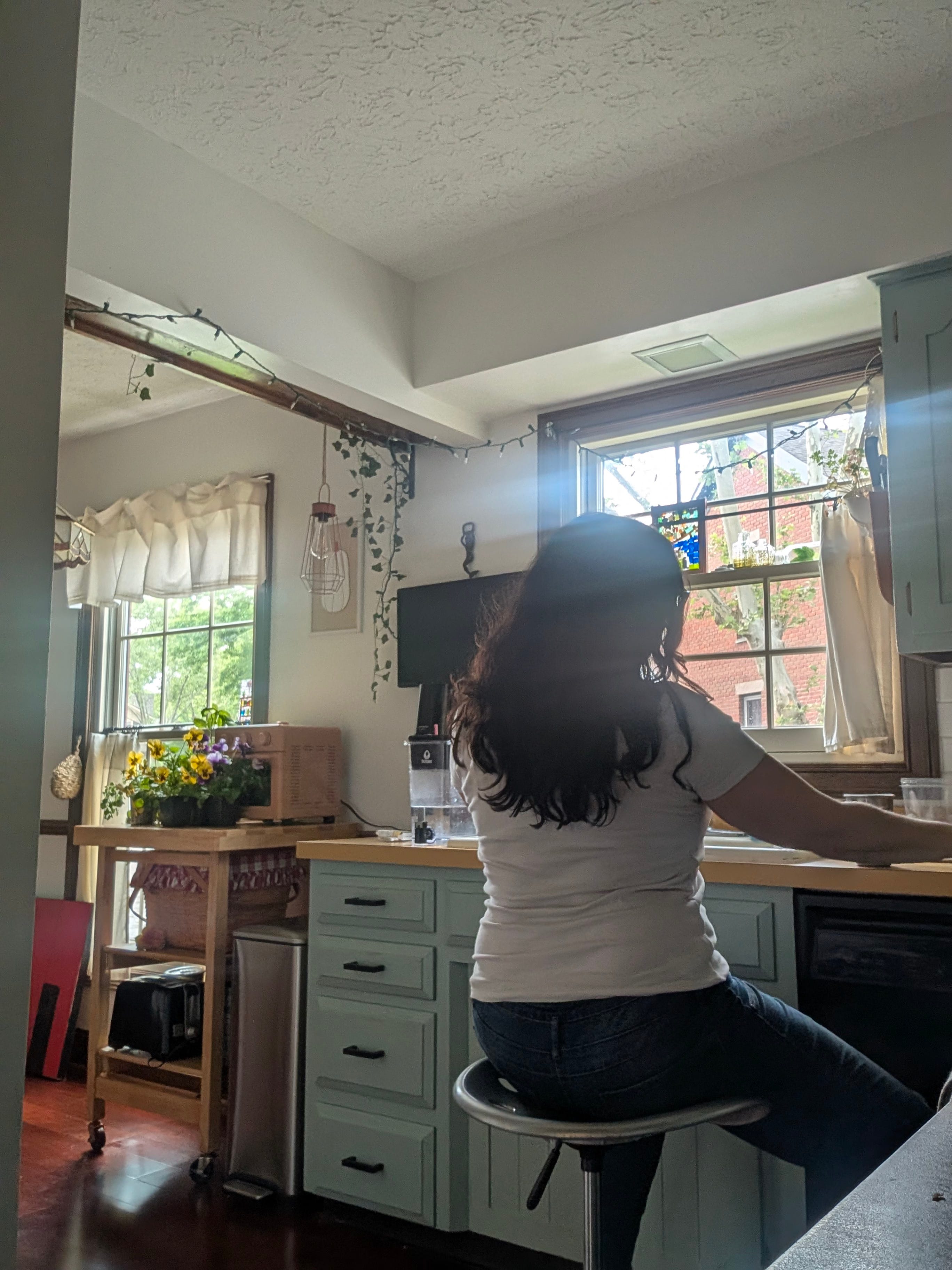
This one has been a struggle. But I realized when I was washing dishes at the sink, sitting on a wheeled tattoo artist stool I purchased at an estate sale, I need mobility aids not in the moment, but for future moments. If I sit down when chopping vegetables, I’ll have energy later for hiking or hanging out with my friends or writing my damn books.
My doctors also want me to get a chair for the shower, but I have been resistant. Mostly because they are very ugly. But any time you raise your hands above your head, you’re taxing your heart. If you need to lie down after taking a shower, you may have Long COVID.
Lifestyle
I use a screen reader to revise. Since I have to look at a screen all day for my job, physical books and audiobooks are easier to read than looking at another screen of an e-book.
Once or twice a week, if I’m dragging during the workday, I’ll drink Liquid IV or Poppi in the afternoon.
Most things? They aren’t urgent.
My neurologist was super impressed that I’d found sensory deprivation tanks on my own. I’d always been curious about them. Our house in Denver was within walking distance of a great place, and floating in warm, salty darkness proves to be very good for my imagination. Also, my brain. Any residual headache disappears and I have more energy and feel happier after floating. That’s backed up by neurology, which supports floating for brain health.
A few months ago there was a used flotation tank for sale on Marketplace. I couldn’t afford it and I don’t have the space for it, but honestly, I considered it. I’d be down there floating all the time.
Massage also helps with fatigue and cognitive issues, as does acupuncture, though both are expensive, and I’ve found floating works better for me.
I track my symptoms with an app, which taught me that being social exerts me more than mental demands, that texting is work, and that sleep really impacts my day. It’s also an important life shift to realize: most things? They aren’t urgent. My child, my art, my friends and community—that’s urgent.
Everything else can wait until I have strength, and it may take days to get there. If you have a friend with chronic illness, know that the time they spend with you, that’s precious. It takes a lot and it is a deliberate decision, where and how we spend our rationed time.
A Spell.. for Everlasting Potatoes!
I was so excited to see my potatoes were growing recently, I jumped up and broke one of my porch string lights.
But I can tell you now this works: take old potatoes in your cupboards that have sprouted. You do not need to buy seedling potatoes. Use what you have. Plant the potatoes in a cloth grow bag, sprouted side up. Put a few inches of potting soil on top, a few inches below. Then cover them with old leaves. Place in sun and water them.
Usually you need to wait until the above-ground foliage turns yellow before harvesting your potatoes. We’ll see if I can wait!